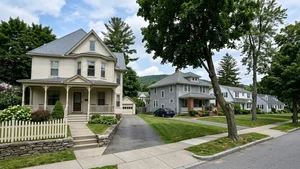
Middletown is the largest city in Orange County, New York, and the anchor of the broader Kiryas Joel-Poughkeepsie-Newburgh metro area. Buyers looking for variety tend to land here when buying a home in Middletown, NY - the housing stock runs from historic downtown properties to newer suburban subdivisions, and the price range reflects that spread.
The market moves at a reasonable pace. Recent data puts the average days on market at about 29, the median sale price around $400,000, and the inventory across roughly 15 associated neighborhoods includes a genuine mix of single-family detached houses, townhomes, and condominiums.
How Middletown is Laid Out
The city breaks into distinct sections, each with its own character - some tightly packed near the center, others spreading toward the borders of Wallkill, Wawayanda, and Goshen. That last point matters more than most buyers expect. Postal addresses don't always line up cleanly with municipal lines, so understanding where these sections sit relative to major roads and local amenities is worth your time before you start booking tours.
Geography and Local Landmarks
Downtown is the anchor. The historic Paramount Theatre and the old O&W Railroad Station mark the core, and residential streets push outward from there into areas like Highland Avenue and Middletown South.
Move farther out and the character shifts. The Galleria at Crystal Run and the Orange County Fair and Speedway sit near the eastern edges, shaping the feel of Circleville, Crystal Run, and Mechanicstown for residents who want quick access to shopping and regional routes. On the western side, Fancher-Davidge Park offers a substantial green space and a lake - a detail that doesn't show up on most buyers' radar until they've already toured half the city.
Housing Types and Price Ranges
At any given time, there are roughly 73 homes available in Middletown. With about 4.1 months of supply, you have real options - but anything priced accurately is moving, often closing at just over 100% of list price. That's not a market where you can afford to overthink things.
The housing stock changes considerably depending on which part of the city you're searching. Early 20th-century builds near the center, late-century subdivisions on the edges - the range is wider than the median sale price alone suggests.
Single-Family Homes and Subdivisions
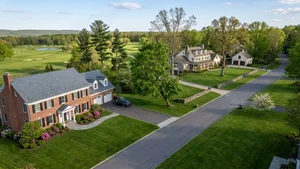
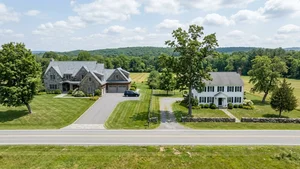
Detached single-family homes dominate in areas like Scotchtown, Slate Hill, and Howells. Traditional suburban layouts, larger lots, established tree-lined streets. Prices generally hover around that $400,000 city median, though updated or larger homes push above it. If yard space and a private driveway are on your list, the outer rings are where the inventory is.
Attached Homes, Condos, and Historic Properties
Downtown Middletown and the blocks immediately surrounding it are where you'll find attached homes and historic properties - walkable, lower maintenance, older character. Condo and townhome communities also cluster near the Crystal Run area, which makes sense for buyers who want proximity to retail and highway access. The trade-off is that attached options tend to offer a lower entry price point than the detached single-family market, which works in some buyers' favor and feels like a compromise to others.
Profiles of Middletown Communities
Middletown has roughly 15 recognized neighborhoods. The city limits are well-defined, but some of these communities blur at the edges into the surrounding towns. Before you decide where to focus your search, it's worth understanding what each area looks like on the ground.
Downtown Middletown and Highland Avenue
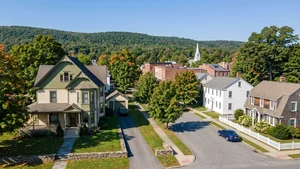
The downtown district is historic architecture, multi-family homes, and older single-family houses. Highland Avenue, just off the city center, carries mostly properties built in the early to mid-1900s - close to the Paramount Theatre and local businesses, and better suited to buyers who want historic character than those hunting for modern open-concept layouts.
Scotchtown, Mechanicstown, and Circleville
Scotchtown and Mechanicstown sit toward the eastern and northern edges and are largely defined by single-family subdivisions built mid-to-late 20th century. Circleville and the Crystal Run area are nearby, which puts residents close to the Galleria at Crystal Run and regional commuting routes. Straightforward suburban layouts - nothing surprising, which is exactly what some buyers want.
Washington Heights and Presidential Heights
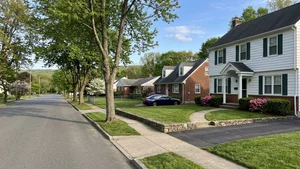
These two enclaves offer a mix of mid-century single-family homes and newer builds on winding streets and cul-de-sacs - the kind of layout that keeps cut-through traffic low. Both are a short drive from city services and parks like Fancher-Davidge, and the lots run moderate in size. Mostly detached homes here.
Local Services and Market Information
School assignments and municipal services in Middletown follow the actual property address, not the neighborhood name or the mailing zip code. A house can carry a Middletown address and still sit inside an adjacent town's jurisdiction. It happens more often than buyers expect.
Check the official maps and contact local departments directly before you make an offer. Don't assume.
School Districts Serving the Area
The main district is the Enlarged City School District of Middletown, which operates Middletown High School, Twin Towers Middle School, Monhagen Middle School, and several elementary schools. It serves the city itself along with adjacent portions of Wallkill, Wawayanda, and Goshen.
School zones don't track neatly onto neighborhood names, though. Some parts of the broader Middletown area fall under the Minisink Valley Central School District instead. Run the specific property address through the district websites to confirm the attendance zone - don't rely on the street name or the general area.
Researching Local Crime Data
The City of Middletown Police Department serves the city, headquartered at 2 James Street under Chief of Police John Ewanciw. For block-level crime statistics, go directly to the department's official records or use the FBI's Uniform Crime Reporting (UCR) portal. Those sources give you factual, address-specific data rather than the aggregated neighborhood summaries you'll find on third-party sites.
Frequently Asked Questions
What neighborhoods and communities are in Middletown, NY?
Middletown has roughly 15 associated neighborhoods. The most recognized include Washington Heights, Circleville, Crystal Run, Slate Hill, Middletown South, Mechanicstown, Scotchtown, Howells, Presidential Heights, Highland Avenue, and Downtown Middletown.
What do homes cost across Middletown's neighborhoods?
The median sale price is currently around $400,000. Where a specific property lands relative to that number depends on type and location - historic downtown attached homes price differently than large detached single-family homes in outer subdivisions like Scotchtown.
What types of homes are available in Middletown?
The market covers a wide range. You'll find historic early-1900s homes downtown, mid-century single-family houses in established neighborhoods, and attached townhomes or condos near commercial centers like Crystal Run.
What school districts serve Middletown's neighborhoods?
Most of the city falls under the Enlarged City School District of Middletown, which includes Middletown High School, Twin Towers Middle School, and Monhagen Middle School. Certain portions of the broader Middletown area are served by the Minisink Valley Central School District instead.
How can I research crime data for a specific Middletown neighborhood?
Request official data directly from the City of Middletown Police Department at 2 James Street, or use the FBI's Uniform Crime Reporting (UCR) program to search documented statistics by specific area.
Which Middletown, NY neighborhoods are best for commuters traveling to New York City?
It depends on how you prefer to commute. Neighborhoods like Circleville and Crystal Run sit near major highways and the local Galleria area, which many commuters favor for quicker highway access.
How do property taxes and HOA fees compare across different Middletown neighborhoods?
Property taxes follow the specific home's assessed value and whether it falls within the city limits or an adjacent town like Wallkill or Goshen. HOA fees only apply if you're buying in a managed subdivision or condo community - not every neighborhood has them.
What type of housing is common in the northern parts of the city?
The northern edges of the city are largely defined by single-family subdivisions built during the mid-to-late 20th century. Buyers focusing on the North Middletown area will find straightforward suburban layouts on established streets.
Where can buyers find homes with historic character?
The downtown district and the blocks immediately surrounding it offer a mix of multi-family homes and older single-family houses. Buyers looking along these historic residential streets will generally find properties built in the early to mid-1900s.