Figuring out exactly how much you can spend on a home requires more than just looking at the sticker price. Buyers entering the Orange County market often realize that localized expenses drastically alter their true purchasing power. Understanding your budget from the start prevents the frustration of falling for a property that sits just outside your financial reach.
The question of how much house can I afford in Middletown NY demands a close look at local taxes, insurance rates, and commuting costs. The landscape of the 2026 market presents distinct opportunities for prepared buyers who understand these underlying numbers. Nailing down your exact price range early is the single most important step in a successful property search.
Current Real Estate Market Trends in Middletown, NY
Middletown stands out as one of the more accessible markets in Orange County when compared to neighboring towns with significantly higher price points. Buyers here find a varied inventory that caters to different preferences and budget levels. The current median home value hovers roughly between $270,000 and $310,000 as of early 2026.
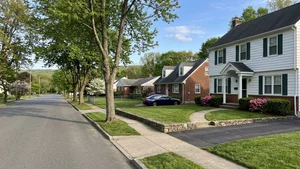
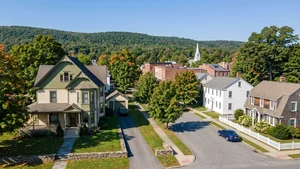
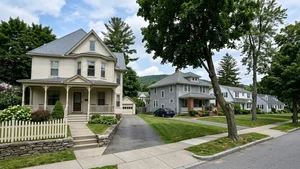
The housing stock itself offers distinct choices depending on where you look within the city limits. You will find historic properties clustered near the revitalized downtown district alongside newer construction in the surrounding developments. Each property type carries its own maintenance and utility expectations that factor into your long-term costs.
Buyers must also factor the condition of the property into their initial budget calculations. Purchasing a historic downtown home might require immediate cash reserves for roof repairs or updated electrical panels. Newer builds in the surrounding subdivisions typically demand less upfront maintenance but often come with a higher initial purchase price.
Exploring these varied neighborhoods is exciting, but buyers must have a firm understanding of their budget before touring homes in the current inventory. Looking at houses priced at $350,000 when your maximum comfortable limit is $280,000 only leads to disappointment. Establishing a strict price ceiling keeps your search grounded in reality and protects your financial future.
Breaking Down Your Monthly Mortgage Payment
A standard monthly mortgage payment consists of four main components, often referred to as PITI. These elements represent your principal, interest, taxes, and insurance combined into one regular payment. Buyers who only calculate the principal and interest frequently find themselves overwhelmed by the true cost of ownership in NY.
The relationship between your principal and interest depends heavily on your chosen loan term and the current mortgage rates. A traditional 30-year fixed-rate mortgage spreads the principal over three decades, resulting in lower monthly payments but higher total interest over time. Securing a competitive interest rate significantly boosts your overall buying power.
Reviewing an amortization schedule provides clarity on exactly where your monthly payment goes during the early years of the loan. In the first decade, the vast majority of your principal and interest payment goes directly toward paying down the interest. Understanding this timeline helps buyers set realistic expectations for building equity in their new property.
Failing to account for local taxes and insurance is the fastest way to ruin a carefully planned housing budget. Orange County carries a substantial tax burden, and insurance premiums have adjusted in recent years.
Property Taxes: Middletown carries a median effective property tax rate of roughly 2.62%, which adds a significant monthly expense to your baseline mortgage.
Homeowners Insurance: The average New York state home insurance premium runs approximately $1,100 to $1,200 annually, depending on the age and condition of the property.
Private Mortgage Insurance (PMI): Buyers putting down less than 20% on a conventional loan will pay a monthly PMI fee until they build sufficient equity.
HOA Fees: Condominium purchases or homes in managed developments often require monthly homeowners association dues to cover exterior maintenance.
Key Factors That Determine Your Buying Power
Mortgage lenders rely on specific financial metrics to calculate exactly how much money they are willing to lend you. Your debt-to-income ratio serves as a primary indicator of your ability to manage a new monthly mortgage payment. This ratio compares your gross monthly income against all recurring debt obligations, including car loans and credit card minimums.
Lenders generally prefer a debt-to-income ratio below 36% for optimal rates, though up to 43% may be permissible for certain loan products. Pushing your ratio to the absolute limit leaves very little room for unexpected expenses or future financial goals. Maintaining a lower ratio demonstrates financial stability and often unlocks better lending terms.
Your credit score acts as the secondary pillar of your buying power, directly dictating the interest rates you are offered. A higher score translates to a lower rate, which can save you tens of thousands of dollars over the life of the loan. Buyers with lower scores might explore an FHA loan, which offers flexible credit requirements and down payments as low as 3.5% for eligible applicants.
Lenders also closely scrutinize your employment history and income stability during the underwriting process. A consistent two-year work history in the same industry provides lenders with the confidence needed to approve larger loan amounts. Self-employed buyers often face stricter documentation requirements and should prepare their tax returns well in advance of applying.
Securing a formal mortgage pre-approval before initiating a home search is an absolute necessity in 2026. A pre-approval letter proves to sellers that your financing is solid and gives you an exact numerical limit for your search. Skipping this step puts you at a severe disadvantage when submitting an offer on a competitive property.
Anticipating Closing Costs and Escrow Fees
The down payment is only the first major cash requirement when purchasing a home in New York state. Buyers must also prepare for a variety of upfront closing costs and escrow fees due at the signing table. These expenses typically range from 2% to 5% of the total home value and cover the administrative side of the transaction.
Typical closing costs include fees for the real estate appraisal, the title search, and the lender's underwriting process. The state also levies a New York State real estate transfer tax, which currently sits at $4 per $1,000 of the purchase price. These mandatory fees add up quickly and must be factored into your initial savings goal.
Lenders also require the establishment of an escrow account to manage your property taxes and homeowners insurance. You will need to pre-pay several months of these expenses upfront to fund the account at closing. The lender then uses this reserve to pay the annual tax and insurance bills on your behalf as they come due.
Negotiating seller concessions can sometimes help buyers offset a portion of these heavy upfront costs. A seller might agree to credit a certain percentage of the purchase price back to the buyer specifically to cover closing fees. This strategy preserves your liquid cash, though it often requires offering a slightly higher purchase price to make the deal attractive.
Buyers should maintain a robust cash reserve after closing rather than draining all liquid assets at the table. Moving into a new house inevitably brings unexpected expenses, from minor repairs to new appliances. Leaving yourself a financial cushion ensures you can handle these surprises without immediate stress.
How Middletown's Infrastructure Impacts Your Cost of Living
The true cost of living extends beyond your monthly mortgage payment to include daily transportation and lifestyle expenses. Middletown offers a distinct mix of regional access and local amenities that shape the typical resident's budget. Evaluating these logistical factors provides a clearer picture of your overall financial commitment.
Commuting to New York City remains a major consideration for many buyers moving into the area. The trip via the Metro-North Port Jervis Line takes approximately 1 hour and 55 minutes to 2 hours and 20 minutes each way. Buyers must carefully calculate these monthly transit costs, as heavy commuting expenses can sometimes offset the savings of a lower purchase price.
Regional travel is highly convenient thanks to immediate access to Interstate 84 and Route 17. This highway connectivity makes navigating Orange County straightforward for both work and routine errands. The local infrastructure supports a steady flow of traffic to major commercial hubs without the severe congestion found closer to the city.
Local utility costs represent another ongoing expense that directly impacts your true monthly cost of living. Heating older properties during New York winters requires a larger energy budget than maintaining a modern, energy-efficient build. Buyers should always request a year of utility history from the seller to accurately model their future monthly expenses.
The area features strong local amenities, including the Garnet Health Medical Center and extensive retail options at the Galleria at Crystal Run. Public recreation spaces like Fancher-Davidge Park offer outdoor access within the city limits. Properties in the area fall under the Enlarged City School District of Middletown, with specific zoning based on strict geographic boundaries.
Frequently Asked Questions
What salary do I need to afford a $300,000 house in Middletown, NY?
You generally need an annual salary between $85,000 and $105,000 to comfortably afford a $300,000 home here in 2026. This estimate accounts for Middletown's median effective property tax rate of roughly 2.62% and current interest rates. Buyers with zero debt can qualify on the lower end of that income spectrum, while those with heavy car payments need higher earnings.
How much of a down payment is needed for a median-priced home in Middletown?
A median-priced home of $290,000 requires a minimum down payment of roughly $10,150 if you utilize a 3.5% FHA loan. Buyers opting for a conventional loan to avoid PMI will need a 20% down payment, which equals approximately $58,000. Your specific loan program and credit score will dictate the exact upfront cash required.
Are there first-time home buyer programs available in New York?
Yes, the State of New York Mortgage Agency offers several programs specifically designed to assist new buyers with upfront costs. These programs frequently provide competitive interest rates and down payment assistance loans for eligible applicants. Utilizing these state resources significantly improves overall affordability for residents entering the Orange County market.
Is there a home affordability calculator specific to Middletown, NY?
Most standard online calculators work well, provided you manually adjust the local tax and insurance fields. You must input the local 2.62% property tax rate and estimate roughly $1,200 for annual NY insurance premiums to get an accurate result. Relying on national default averages in these tools will drastically underestimate your actual monthly payment.