If you have been looking for an entry point into the Hudson Valley real estate market, you have likely noticed a pattern: prices in towns like Beacon, Warwick, and Cold Spring have skyrocketed, compressing margins for investors. That is where Middletown comes in.
Sitting squarely at the intersection of I-84 and Route 17, Middletown has solidified its reputation as the economic hub of Orange County. It is a market that balances accessibility with genuine affordability. While other towns have become prohibitively expensive, you can still find entry-level assets here in the $350,000 to $400,000 range.
However, the landscape has changed. With the completion of the Downtown Revitalization Initiative (DRI) projects in 2025, the city is looking sharper and attracting a different tier of tenant than it did five years ago. This guide is a data-driven look at what it takes to succeed here in 2026, from calculating ROI to navigating the realities of being a landlord in New York.
Why Invest in Middletown Now? (2026 Market Analysis)
We are currently seeing what I call a "stabilized seller's market." The chaotic appreciation of the early 2020s has cooled off, but inventory remains tight because people simply want to live here.
A massive driver of this stability is the "DRI Effect." Now that the $10 million in state grant projects are finished, we are seeing the tangible benefits. The improvements to the streetscapes on North and South Main, along with the Erie Way Park skate park, have significantly improved the livability of the downtown corridor. It feels like a place people want to stay, rather than just pass through.
Beyond the aesthetics, the infrastructure supports a strong rental pool. The Heritage Trail expansion now connects seamlessly to the Town of Wallkill, which is a major draw for active tenants. You also have three distinct pillars of demand:
Commuters: The Port Jervis Line offers a direct train to NYC, making this a viable affordable alternative for hybrid workers.
Medical Professionals: Garnet Health Medical Center is a massive employer requiring housing for staff.
Students & Faculty: SUNY Orange and Touro College provide a steady stream of semester-based renters.
Right now, the median home price hovers right around $395,000 depending on the asset class, while median rents for 1-2 bedroom units are holding strong at $1,900 to $2,300. With 40–55 days from listing to closing, you have time to do due diligence, but well-priced inventory still moves.
The Numbers: Cap Rates, Cash Flow, and Appreciation
Let's talk about the math, because this is where Middletown differs from its neighbors. This market is primarily a cash flow play rather than a pure appreciation play. While property values are creeping up due to a lack of new supply, your strategy here should focus on monthly income.
Gross yields in Middletown are generally higher than what you will find closer to NYC, often landing in the 6–8% range. However, you need to be realistic about your net cap rate. Once you factor in expenses—specifically taxes—a realistic net cap rate for a stabilized property is usually between 5% and 6%.
For example, if you buy a duplex for $380,000 and it generates $2,200 per unit in rent, your gross yield looks fantastic on paper—nearly 7%. But you have to calculate your return on investment carefully. The "Orange County Tax" is real, and it eats significantly into your Net Operating Income (NOI).
It is also vital to understand the distinction between the "City" and the "Town." You might see a listing with a Middletown address that is actually in the Town of Wallkill. The taxes, services, and municipal rules differ between the two, even if they share a zip code. Always verify the jurisdiction before running your numbers.
Best Neighborhoods for Investment in Middletown
Middletown is not a monolith; street-by-street knowledge is essential. Depending on whether you are looking for a flip or a long-term hold, different areas offer different advantages.
Downtown / Business Improvement District (BID) This is the area that has benefited most from the revitalization. It is walkable to the Paramount Theatre and new restaurants, appealing to tenants who prioritize transit and lifestyle. However, be ready for older housing stock that requires ongoing maintenance.
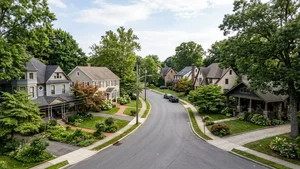
Presidential Heights If you are looking for stability, this is a strong contender. The streets here are lined with mid-century and Victorian homes. The entry price is higher, but the tenant profile tends to be long-term, resulting in lower turnover costs. It is a quiet, residential area that retains value well.
Scotchtown (Town of Wallkill Border) This area feels much more suburban. You will find larger lots and homes built in the 1970s or later. It is very close to the Route 211 retail corridor, making it popular for single-family rentals. Tenants here often prioritize yard space and easy parking over walkability.
Near SUNY Orange / Touro This pocket offers steady demand from students and visiting faculty. It is a great spot for smaller multifamily units or room rental strategies. If you are comfortable managing higher turnover aligned with the academic calendar, the vacancy rates here stay very low.
Property Types: Single-Family vs. Multifamily
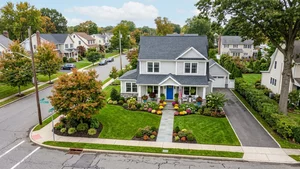
When building your portfolio here, the "bread and butter" asset is the 2-4 unit multifamily property. These units offer the best risk mitigation; if one unit goes vacant, the other pays the mortgage. Demand for these units is incredibly high among local renters.
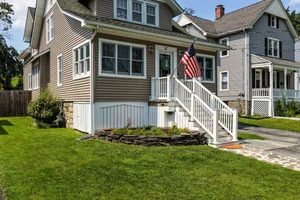
Single-family homes are a different beast. They are easier to sell later if you need an exit strategy, but the cap rates are generally lower. You are also competing directly with primary homebuyers who are often willing to overpay for a place to call their own, which can make finding a deal difficult.
Condos and townhomes—mostly found in the Town of Wallkill sections—offer lower maintenance, but you must watch the HOA fees. A $300 monthly HOA fee can quickly destroy the cash flow margins on a rental unit, so check the association financials closely.
Operating Expenses: The Orange County Tax Factor
If there is one section of this guide you memorize, make it this one. Property taxes in Orange County are high relative to home values. The effective tax rate is often around 2.78%, meaning a $400,000 asset could easily come with an $11,000+ annual tax bill. If you fail to underwrite this correctly, your positive cash flow will vanish.
Beyond taxes, you need to budget for utilities and upkeep:
Water/Sewer: In the city, these bills are quarterly. In older multi-family homes, meters are rarely split, so the landlord usually pays this bill.
Heating Costs: Many of the charming Victorians still run on old oil boilers. Oil is expensive, and these systems are inefficient. You should budget for heavy winter heating costs or plan a capital expenditure to convert to gas or electric heat pumps.
Insurance: Premiums have risen across New York State. Do not use a generic online estimator; get a quote from a local broker during your due diligence period.
Landlord Laws & Regulations (2026 Update)
New York is a tenant-friendly state, and recent regulations have shifted the playing field.
Good Cause Eviction As of 2024, "Good Cause" protections are in play. This limits your ability to non-renew a lease without a specific, valid reason (like non-payment or lease violations). It also ties rent increases to inflation. The "unreasonable" increase standard is generally defined as the Consumer Price Index (CPI) plus a small margin, or a hard cap (often around 10%), whichever is lower. You cannot just double the rent because the market got hot.
FARE Act (Broker Fees) The landscape for leasing costs has shifted. In most cases, if you hire a listing agent to find a tenant, you—the landlord—are responsible for paying the broker fee. This increases your upfront vacancy cost, so factor that into your first-year budget.
Security Deposits & Permits Security deposits are strictly capped at one month's rent. Additionally, the City of Middletown has a rental registry. You must ensure your units are permitted and pass inspection. Operating under the radar is not a viable strategy here.
Tips for Out-of-State Investors
We see many investors looking at Middletown from out of state, attracted by the price point. If that is you, here is the reality check.
You absolutely need professional property management. Between the specific tenant protection laws and the maintenance needs of 100-year-old buildings, this is not a market you can self-manage from a distance.
Be wary of buying "sight unseen." Photos can hide sloping floors, crumbling foundations, or active knob-and-tube wiring, which is common in the older downtown stock. Always hire a specialized local inspector who understands historic homes.
Finally, do not forget the weather. Snow removal is a mandatory expense here. You can try to assign it to tenants in a single-family lease, but for multifamily properties, you are responsible for keeping sidewalks and driveways clear to avoid liability.
Frequently Asked Questions
Is Middletown NY a good place to invest?
Yes, it is a strong market for cash flow investors who can manage the high property tax burden. The recent infrastructure improvements and steady tenant demand from the medical and education sectors provide a stable rental base.
What is the average rent in Middletown NY in 2026?
For 2026, you can expect average rents to range between $1,900 and $2,300 for decent 1-2 bedroom apartments. Renovated units in prime downtown locations or larger single-family homes can command significantly more.
How much are property taxes in Middletown NY?
Property taxes are substantial, with effective rates often hovering around 2.6% to 2.9% of the assessed value. For a typical investment property, you should anticipate an annual bill between $7,800 and $9,000, depending on the specific assessment.
Is Middletown NY rent controlled?
While not "rent controlled" in the traditional NYC sense, it is subject to Good Cause Eviction laws. This effectively caps annual rent increases to a standard tied to inflation (CPI) and limits a landlord's ability to end a tenancy without specific cause.