If you walk through downtown Middletown today, past the revitalized brick buildings and the bustle of new businesses, you can still feel the industrial grit that built this city. For anyone looking into living in Middletown NY, understanding its past gives you a much deeper appreciation for the architecture and the layout of the streets.
Middletown wasn’t an accident. Its location—roughly halfway between the Hudson and Delaware rivers—made it a natural resting point for early travelers and, later, a powerhouse for logistics. While it has evolved into a modern commercial hub for Orange County, the city’s identity is permanently etched by the steam engine. It is a place where history isn't just in a textbook; it’s in the foundations of the homes and the layout of the neighborhoods.
Early Roots: John Green and the Minisink Angle
Before the tracks were laid and the factories hummed, this area was quiet farmland. The story really begins around 1744 with John Green, the first settler to put down roots on the DeLancey patent. At the time, life here was dictated by the seasons and the soil.
For a long time, the settlement was known as "South Middletown" to distinguish it from a nearby hamlet. It wasn't until the village officially incorporated in 1848 that the "South" was dropped, giving us the Middletown we know today.
In those early days, the economy was simple. It was driven by farming and small-scale trade along the Minisink Road, which essentially became the blueprint for today's Main Street. If you own one of the older farmhouses on the outskirts of town, you are living on land that likely fed the region more than two centuries ago.
The Railroad City: How Trains Built Middletown
If you ask any local historian what made Middletown, the answer is always the same: the trains. The arrival of the Erie Railroad in 1843 was the single most transformative event in the city's history. Suddenly, a quiet farming village was connected to global markets, and the population skyrocketed.
However, the city's true claim to fame came with the New York, Ontario & Western Railway (the O&W). Middletown wasn't just a stop on the line; it was the headquarters. The O&W was often called the "Old & Weary" or a "coal hauler" line, but for Middletown, it was the economic heartbeat. The railroad employed thousands of residents and turned the village into a major industrial node.
The crown jewel of this era was the O&W Station. Designed by the renowned architect Bradford Lee Gilbert, the headquarters building is a stunning piece of architecture that has seen significant restoration efforts leading into 2026. When you look at Middletown NY real estate, you’ll notice that the neighborhoods radiating out from the tracks are dense and walkable—a direct result of railroad workers needing to live close to the station.
Industry and Innovation: Saws, Hats, and Shoes
The railroads didn't just move people; they moved goods, which attracted heavy industry to the area. Because factories could easily ship their products anywhere in the country, Middletown became a manufacturing hotbed.
One of the most famous names from this era was Clemson Bros. Inc., known worldwide for their "Star Hack Saws." If you visit the Clemson building today, you’ll see a perfect example of adaptive reuse—the historic brick factory has been converted into a brewery and mixed-use commercial space. It’s a favorite spot for locals and a great example of how the city honors its past while modernizing.
Beyond saws, the city produced shoes, hats, and leather goods from local tanneries. This industrial boom created a massive demand for housing. The influx of immigrants and working-class families during the late 19th and early 20th centuries led to the construction of the varied housing stock we see today, from modest row houses to sturdy multi-family buildings.
The City Within a City: Middletown State Homeopathic Hospital
While industry was booming, another massive institution was taking shape on the edge of town. In 1874, the Middletown State Homeopathic Hospital opened its doors. It was unique for its time, being the first purely homeopathic mental hospital in the United States.
At its peak, the hospital was essentially a self-sufficient city. It had its own power plant, a working farm to feed patients and staff, and a sprawling campus that employed a significant portion of the local population.
Today, that legacy lives on in a different form. The grounds have been repurposed to house the SUNY Orange college campus and other community facilities. The Webb Horton House, a stunning mansion associated with the era, remains a key remnant of this history. For residents, having a college campus integrated into the historic fabric of the city adds a layer of culture and education that anchors the local community.
Architectural Legacy: Victorian Grandeur and Historic Neighborhoods
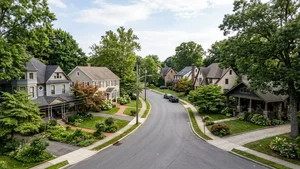
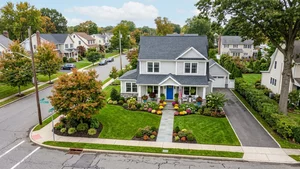
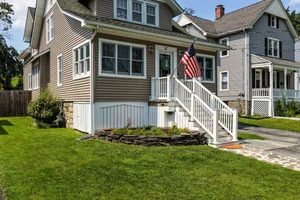
For homebuyers, the most visible reminder of Middletown’s history is the architecture. The money that flowed in from the railroads and factories didn't just disappear; it was built into the skyline and the residential streets.
Highland Avenue: This is often considered the "Gold Coast" of Middletown. As industrial magnates grew wealthy, they built elaborate Queen Anne and Victorian mansions here. If you are looking for historic homes for sale in Middletown NY, this is the premier street to admire.
Downtown Landmarks: Beyond the homes, the civic buildings are impressive. The Paramount Theatre, built in 1930, remains a cultural anchor, and the Thrall Library (originally housed in the Erie Depot) is a testament to the city's focus on community.
The Housing Mix: The city offers a distinct mix of housing. You have the grand estates on the hill, but you also have the charming, durable worker cottages near the tracks. This variety allows for a diverse real estate market where you can find both luxury historic restoration projects and affordable starter homes.
Post-War Shifts and Modern Revitalization
Like many industrial cities, Middletown faced changes after World War II. The dominance of the railroad faded as highways took over, and manufacturing jobs began to move elsewhere.
By the 1970s and 80s, the commercial center of gravity shifted away from the historic downtown toward Route 211. This area became known as the "Miracle Mile," transforming into the retail and dining hub for the region with malls and chain restaurants.
However, the story didn't end with deindustrialization. In recent years, and continuing through early 2026, there has been a massive renaissance in the historic downtown. Efforts to restore the O&W station, the conversion of old factories into lofts and breweries, and initiatives like the "Run 4 Downtown" have brought energy back to the city center. For someone buying a home here now, you get the best of both worlds: the convenience of the Miracle Mile and the character of a revitalizing historic city.
Frequently Asked Questions
When was Middletown, NY founded?
Middletown was first settled around 1744 by John Green, but it wasn't officially incorporated as a village until 1848. It later became a city in 1888, which is why you will see different dates on various historical markers.
Why is Middletown called the Railroad City?
The nickname comes from its history as a major transit hub for the Erie Railroad and the headquarters for the New York, Ontario & Western Railway (O&W). For decades, the railroad was the primary employer and economic engine of the community.
What is the history of the O&W building in Middletown?
The O&W building was the headquarters for the railway and is a significant architectural landmark designed by Bradford Lee Gilbert. After the railroad closed in 1957, the building faced years of neglect and fire damage, but recent years have seen major restoration efforts to preserve it as a symbol of the city.
Are there historic districts in Middletown?
Yes, Middletown has several areas with rich historic architecture, most notably the Highland Avenue area. This neighborhood features well-preserved Victorian and Queen Anne homes that were originally built by the city's wealthy industrialists and business owners.