If you walk through downtown Goshen today — past the First Presbyterian Church with its 150-year-old spire, past the Orange County Courthouse, past the white fences of the Historic Track that has seen harness racing champions for generations — you are walking through one of the most historically continuous communities in the Hudson Valley. Goshen did not just survive the centuries; it remained relevant through all of them.
For anyone looking at living in Goshen, NY, understanding this history does not just satisfy curiosity. It explains why the village looks the way it does, why the real estate market here behaves differently than in surrounding towns, and why buying here means something more than a transaction — it means joining a community with an unusually long memory.
The Founding: 1714 and the Early Settlement
Goshen's story begins in 1714, making it one of the oldest continuously settled communities in what is now Orange County. The name itself carries biblical weight — Goshen was the fertile land given to the Israelites in Egypt, and the early settlers who named this place believed they had found their own version of it.
Like its namesake, the area had deep agrarian roots. The original settlers, many of European descent who arrived through the lower Hudson Valley corridor, recognized the land's agricultural potential immediately. The soil here, combined with the rolling topography that provided natural drainage, made it well-suited to farming and livestock.
The turning point in the village's early history came quickly: in 1727, Goshen was designated the seat of Orange County. That decision — made when the county itself was barely a generation old — changed everything. It meant the courthouse would be here. The county government would be here. The lawyers, the magistrates, the clerks, and eventually the professional class of the region would be here. That institutional anchor is why Goshen has maintained its civic identity and its commercial core through economic upheavals that hollowed out comparable communities elsewhere.
The Civil War and the Orange Blossoms
Goshen's identity was tested — and defined — by the Civil War. In 1862, a volunteer infantry regiment was organized right here in Orange County. The regiment became famous enough to earn a lasting monument in the village: the Orange Blossoms Monument, which stands today as a reminder of the men who left these streets to fight in one of the most consequential conflicts in American history.
The monument is more than a historical marker. It is a symbol of the civic character that has always defined Goshen — a small community willing to contribute more than its size might suggest. For buyers who value communities with a sense of identity, this kind of living history is not incidental; it is the foundation.
The Harness Racing Era: When Goshen Was the Center of the Sport
If the courthouse gave Goshen its civic identity, the Goshen Historic Track gave it its cultural one.
Harness racing has deep roots in Orange County's horse farming tradition, and Goshen became its capital. The Historic Track is the oldest continuously operating harness racing facility in the United States — a distinction that earned it the title of National Historic Landmark, making it the first sporting venue in the country to receive that honor.
The Hambletonian Stakes — the most prestigious event in harness racing, the equivalent of the Kentucky Derby for this sport — was originally run at Goshen. The Hambletonian drew national attention to this small Orange County village and established Goshen's reputation far beyond its borders. While the Hambletonian moved to the Meadowlands in New Jersey in the 1980s, the Historic Track remains active and continues to host racing events that draw enthusiasts from across the region.
The Harness Racing Museum and Hall of Fame, located adjacent to the track, preserves this legacy with thousands of artifacts, rotating exhibits, and a 3D harness racing simulator that gives visitors a visceral sense of what the sport looks like from the sulky. For anyone buying a home in Goshen, these institutions are not just nearby attractions — they are part of daily life in the village.
Architectural Legacy: Federal, Victorian, and Everything Between
Like many county seats of its era, Goshen accumulated architectural wealth over the centuries, and much of it is still standing.
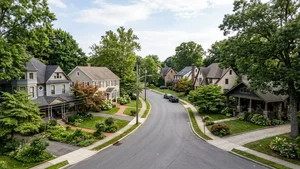
The oldest structures in the village reflect Federal and Greek Revival styles from the late 18th and early 19th centuries. These are among the most distinguished homes in Orange County — symmetrical facades, elegant proportions, and craftsmanship that has outlasted multiple generations of owners.
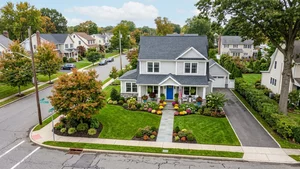
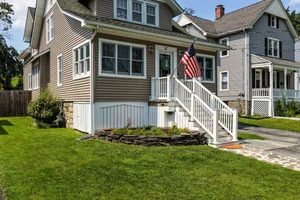
The Victorian era brought another wave of building, and the resulting streetscape on streets like South Church Street and Murray Avenue is genuinely impressive. These are not fixer-uppers draped in original detail — many have been lovingly maintained and updated by owners who understood what they had.
The Church Park Historic District, anchored by the First Presbyterian Church whose spire has dominated the village skyline for more than 150 years, is listed on the National Register of Historic Places. It serves as the architectural and civic heart of the village, giving Goshen a central gathering point with genuine historical gravitas.
For homebuyers interested in historic properties, Goshen offers something Middletown does not: a more concentrated supply of well-preserved pre-Civil War and Victorian-era homes within walking distance of an active downtown. These homes are not cheap — they reflect the premium the market places on Goshen's prestige — but they are available, and they represent a genuine piece of American architectural history.
Modern Goshen: Stability, Not Boom and Bust
Unlike many of its regional neighbors, Goshen did not go through a dramatic economic collapse and revival cycle. It never had a single dominant industry that could crater the economy when it left. The courthouse kept the professional class employed. The farms kept the land productive. The Historic Track kept the village's name on the map.
What Goshen has experienced in recent years is a quiet but meaningful appreciation — in both cultural reputation and real estate values. The arrival of LEGOLAND New York Resort, which opened nearby in 2021, brought an unexpected economic boost and international visibility to the area. The resort has drawn visitors who had never considered Goshen and introduced a new generation to the village's charms.
Meanwhile, the broader Hudson Valley migration trend — accelerated significantly by remote work flexibility post-2020 — brought a wave of new buyers from the New York metro area who were specifically looking for communities like Goshen: historic, safe, walkable, with good schools and a genuine sense of place. Home prices responded accordingly, with the 12-month trailing median for single-family homes reaching a historic high above $651,000 in early 2026.
For buyers, this trajectory is important context. Goshen's price appreciation is not a bubble driven by speculation. It is the market catching up to a quality of life that longtime residents have always known about.
Frequently Asked Questions
When was Goshen, NY founded? Goshen was founded in 1714 and became the seat of Orange County in 1727 — one of the oldest continuously operating county seats in New York State.
What is the Goshen Historic Track? The Goshen Historic Track is the oldest active harness racing facility in the United States. It was the first sporting venue in America to be designated a National Historic Landmark, and it was the original home of the Hambletonian Stakes, the most prestigious event in harness racing.
Does Goshen, NY have historic homes for sale? Yes. Goshen has one of the strongest concentrations of pre-Civil War and Victorian-era homes in Orange County, many of them well-preserved and located in or near the walkable village center. The Church Park Historic District is listed on the National Register of Historic Places.
Why did Goshen become the county seat? Goshen was designated Orange County seat in 1727 because of its central location within the county and the established settlement that had already taken root there. That decision shaped the village's character permanently — civic institutions, professional services, and community investment have been concentrated here ever since.