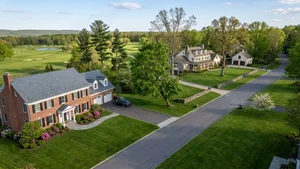
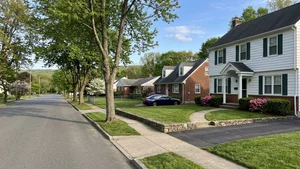
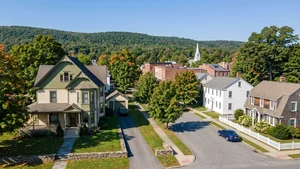
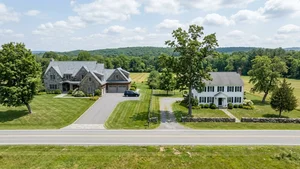
If you are looking at the current real estate landscape in Middletown, you might think selling is as easy as putting a sign in the yard. After all, we are firmly in a Seller's Market. Inventory remains low, and homes are turning over fast—often going pending in just 19 to 29 days.
However, listing your home in 2026 isn't just about speed; it's about maximizing your return. With median sold prices hovering between $366,000 and $389,000 (a significant jump of roughly 12.5% year-over-year), there is a lot of equity on the table. But here is the catch: buyers today are savvy. They have access to the same data we do.
The old strategy of "pricing high and negotiating down" is largely a failure in this specific market. If you overshoot the mark, you risk sitting stale while other homes for sale in Middletown fly off the market. To get the best price, you need a strategy that accounts for the unique quirks of the 10940 zip code—specifically the confusing split between the City and the Town.
The "Two Middletowns" Factor: City vs. Town of Wallkill
One of the biggest pricing mistakes sellers make is looking at a generic average for "Middletown" without realizing that the 10940 zip code actually covers two distinct real estate markets: the City of Middletown and the Town of Wallkill.
These two areas operate differently when it comes to taxes and buyer demand, which directly impacts your pricing ceiling.
The Tax Impact on Buyer Power
Buyers don't just look at the list price; they look at their monthly payment. In our area, property taxes are a massive part of that equation. Median tax bills here often exceed $6,500, and new construction can be 20% higher.
Generally, the City offers municipal services like sewer, water, and trash pickup, while many parts of the Town rely on private septic and well systems. While the services in the City are convenient, the tax rate differences can change a buyer's pre-approval amount. A buyer might qualify for a $400,000 home in the Town of Wallkill but only a $375,000 home in the City due to the difference in monthly tax burdens.
Neighborhood Nuances
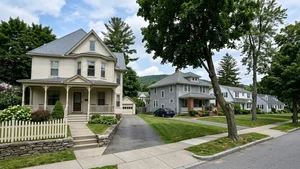
You also have to look at neighborhood demand. A historic home in the grid of the City—like those in Presidential Heights—competes differently than a mid-century raised ranch in the Scotchtown or Mechanicstown hamlets of the Town.
Typically, the Town hamlets have a slightly higher price ceiling for standard single-family homes, while the City attracts buyers looking for historic architecture or multi-family investment potential. When we look at the cost of living in Middletown NY, these neighborhood distinctions are the first thing a local expert will check before suggesting a list price.
Capitalizing on the "Commuter Premium"
Once we understand your location, we look at your connectivity. Middletown has become a haven for hybrid workers leaving the five boroughs, and they are willing to pay a premium for an easier morning routine.
The 10-Minute Rule
The average commute for residents here is roughly 31 minutes, which is high relative to the national average. Because of this, access to the Metro-North Railroad (Port Jervis line) is a tangible asset.
If your home is within a 10-minute drive of the Middletown-Town of Wallkill train station or has immediate access to the Route 17/I-84 interchange, you can price aggressively. This "Commuter Premium" acts as a price multiplier. Buyers who need that direct connection to Penn Station or easy highway access will often overlook outdated cosmetics if the commute is right.
Pricing Models: Historic Charmer vs. Post-War Colonial
Middletown's housing stock is incredibly diverse, with about 32% of homes built before 1939. You cannot price a Victorian on Highland Avenue the same way you price a 1990s colonial in a cul-de-sac.
Historic Homes (Pre-1940)
For these properties, we use a "Benchmark Strategy." True comparables (comps) are hard to find because no two historic homes are alike. We focus on unique features—original woodwork, stained glass, or pocket doors—to justify the value.
However, you must be realistic about CAPEX (capital expenditures). Buyers love charm, but they fear old slate roofs and oil tanks. We often have to price slightly lower than newer homes to leave room in the buyer's budget for immediate updates.
Suburban/Newer Homes (1970s-2020s)
If you own a ranch or colonial in a development like Scotchtown, you are selling a commodity. There are likely ten other houses just like yours that have sold in the last six months.
For these homes, we use the "Bidding War Strategy." Because the value is clear and comps are plentiful, newer homes in this market often command 101% to 103% of the list price. The goal here is to price slightly under the competition to drive traffic and generate multiple offers.
Why the "Zestimate" Fails in Orange County
We all check online values, but reliance on automated valuation models (AVMs) like the Zestimate can be dangerous in Orange County. Algorithms are great at math, but they are terrible at local nuance.
Tax and Condition Blindness
An algorithm cannot distinguish between the City and Town tax differentials we discussed earlier. It sees two 2,000-square-foot houses in 10940 and assumes they are equal, even if one has significantly higher taxes that dampen buyer purchasing power.
Furthermore, an AVM cannot see inside your house. It doesn't know that you just spent $50,000 renovating the kitchen of your 1900s Victorian, or that your neighbor's house sold low because it was a foreclosure in disrepair.
The Necessity of a Human CMA
This is why a Comparative Market Analysis (CMA) is non-negotiable. A local expert adjusts for specific school district lines—knowing that a home on the border of the Minisink or Pine Bush districts might carry a different value proposition than one firmly in the Middletown district.
3 Tactical Pricing Models for 2026
Depending on your timeline and risk tolerance, there are three ways we can position your home.
1. The "Event" Price (Undercut Strategy)
This involves listing your home 5% to 10% below fair market value.
Best for: Move-in ready homes in high-demand areas like Scotchtown.
Goal: To create a "frenzy." In a market with 19 days to contract, this strategy aims to get 10+ offers on opening weekend, driving the final price well above what you would have asked for originally.
2. The "Needle" Price (Fair Market Strategy)
This involves listing exactly at the comparable sales value.
Best for: Historic homes or unique properties that need a specific type of buyer.
Goal: To attract serious, qualified buyers. It might take a few weeks longer than the "Event" strategy, but it reduces the risk of leaving money on the table if a bidding war doesn't materialize.
3. The "Anchor" Price (Testing the Ceiling)
This involves listing high to see if a buyer bites.
Best for: Sellers with absolutely no deadline who don't mind if the house sits.
Warning: This is risky in a high-interest rate environment. Overpriced homes that sit for 60+ days become "stale," and buyers eventually assume something is wrong with the property, leading to lowball offers.
Frequently Asked Questions About Pricing in Middletown
How much are closing costs for sellers in Middletown, NY?
Sellers should budget for the New York State transfer tax, which is currently $4 per $1,000 of the sale price. On top of that, you will have attorney fees, potential Orange County recording fees, and agent commissions, so it is vital to calculate your net proceeds before setting a list price.
Does a finished basement add value in Middletown?
A finished basement adds significant usability and appeal, but it only adds "appraisable" value if it has a Certificate of Occupancy (CO). In New York, legal square footage is a major pricing factor; without the CO, buyers (and their banks) may not consider that space as part of the home's value.
Is it better to price high and negotiate down?
In the current fast-paced market, this strategy usually backfires. With homes going to contract in about 19 to 29 days, a listing that sits for two months due to overpricing develops a stigma. You often end up selling for less than you would have if you had priced it correctly from day one.