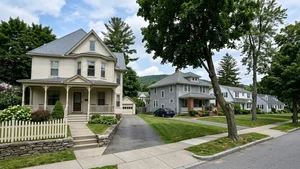
The median list price for a home in Middletown, NY sits around $425,000 as of spring 2026. This figure places the city below the pricing thresholds seen in neighboring Hudson Valley towns like Goshen or Warwick. Many homeowners in Orange County look toward this area when they want to reduce their square footage and lower their monthly carrying costs.
Finding a smaller property often means trading a large yard for a managed community or a single-story layout. Buyers looking at downsizing in Middletown, NY will find a mix of older condominium complexes, newer townhouse developments, and dedicated 55+ communities. The local housing market moves quickly, so understanding the available housing styles and expected costs helps streamline the search.
The Financial Impact of a Smaller Footprint
Selling a larger property in Orange County can free up substantial home equity. Buyers who cash out of a four-bedroom colonial often use those funds to purchase a smaller townhouse or condo outright. Eliminating a mortgage payment provides immediate budget flexibility for travel, hobbies, or retirement savings.
Property taxes also play a major role in the decision to move. A smaller footprint generally means a lower assessed value, which translates to a reduced annual tax burden. Middletown offers a variety of housing options that allow buyers to keep their tax bills manageable while staying close to familiar Hudson Valley amenities.
Maintenance costs shrink alongside the square footage. Heating and cooling a 1,200-square-foot condo requires far less energy than maintaining a large multi-level home. These reduced utility bills add up over the course of a year, leaving more money in your pocket.
Current Prices for Condos and Townhouses
Homes in the 10940 zip code often go under contract in under 60 days. Small condos in Middletown typically range from $199,000 to $350,000, depending on the age of the building and recent interior updates. Developments around Concord Lane or Deer Court Drive frequently feature two-bedroom units that fit this price bracket.
Buyers should expect competition for single-story layouts. Homes without stairs are always in high demand among those looking to age in place or simplify their daily routines. Sellers recognize this preference, and well-maintained ranch-style units rarely sit on the MLS for long.
Evaluating Housing Styles
Townhouses offer a middle ground between a detached home and an apartment-style condo. Many of these units include a small private patio or a one-car garage. You still share walls with neighbors, but you retain a distinct sense of ownership over your immediate exterior space.
Condominiums often provide the lowest-maintenance lifestyle available. The association handles the exterior upkeep, leaving you responsible only for the interior of your unit. This setup works well for residents who want to travel frequently without worrying about property upkeep.
Managed Communities and Homeowners Associations
Moving into a managed community means handing over the lawn care and snow removal to a homeowners association. These services free up your weekends and eliminate the need to maintain heavy landscaping equipment. Buyers should review the HOA documents carefully to understand exactly what exterior maintenance the monthly fee covers.
Different developments offer varying levels of shared amenities. Condominium complexes like Spring Hollow provide residents with access to a community pool and tennis courts. These shared facilities offer recreational options without the personal upkeep required for a private backyard pool.
Wildflowers at Wallkill
Wildflowers at Wallkill operates as a dedicated 55+ active adult community. Homes in this development generally sell between $480,000 and $515,000. The neighborhood features a clubhouse, indoor and outdoor pools, and organized social activities for residents.
The HOA fees here run near $619 per month. This fee covers the extensive amenity package, common area maintenance, and individual lawn care. Lenders require buyers to include this monthly cost in their debt-to-income ratio when applying for a mortgage.
Proximity to Healthcare and Retail
Access to medical care stands out as a priority for many buyers changing their living situation. Garnet Health Medical Center serves as the primary regional hospital for the area. The facility sits just off Route 17, making it a short drive from most residential neighborhoods in the city.
Retail options are concentrated near the highway corridors. The Galleria at Crystal Run features a variety of national retailers, dining options, and a movie theater. Several grocery store chains and pharmacies operate within a few miles of the main residential developments.
Outdoor recreation remains accessible even after giving up a large private yard. Fancher-Davidge Park offers walking paths, a lake, and open green space. Residents can easily spend an afternoon outdoors without having to mow the grass afterward.
Commuting Routes and Public Transit
The Middletown Metro-North station operates on the Port Jervis line. Trains run from this station down to Hoboken Terminal in New Jersey. Commuters heading into Manhattan can transfer at Secaucus Junction to reach Penn Station.
The train commute to Penn Station via the Secaucus transfer takes roughly one hour and 45 minutes to two hours. This timeline makes daily travel to the city possible, though many residents prefer it for occasional trips rather than a five-day-a-week commute. The station includes a large parking lot for daily riders.
Driving routes center around Route 17 and Interstate 84 in New York. These two highways intersect near the city center, providing direct access to the rest of the Hudson Valley, northern New Jersey, and Pennsylvania.
Sorting Belongings and Hiring Movers
Moving into a smaller floor plan requires a focused approach to your existing furniture. You should measure the rooms in your new home before deciding what to pack. A large dining room table or an oversized sectional sofa might not fit into a two-bedroom condo.
The decluttering process presents an opportunity to donate or recycle unwanted items. Many local charities will pick up gently used furniture directly from your driveway. Sorting your possessions early prevents you from paying to move boxes you will eventually throw away.
Working with Local Professionals
Hiring local movers in Middletown can simplify the physical transition. Many companies offer full-service packing, which saves you from boxing up decades of memories on your own. Professional crews also handle the heavy lifting, reducing the risk of injury or damage to your items.
You should request multiple quotes from moving companies to compare the cost of moving. Prices vary based on the total weight of your belongings and the distance between the two properties. Booking your movers a few months in advance ensures availability, especially during the busy summer season.
Frequently Asked Questions
What are the average HOA fees for condos in Middletown, NY?
Monthly dues typically range from $250 to $400 for standard condominium complexes without extensive amenities. Communities offering clubhouses, indoor pools, or manned gates will charge more. Buyers should review the specific association documents before closing to verify what services the fee covers.
Are there 55+ active adult communities in Middletown, NY?
Yes, the area features several age-restricted developments designed for lower-maintenance living. Neighborhoods like Wildflowers at Wallkill offer single-family homes and townhouses with shared recreational facilities. These properties require at least one resident to meet the minimum age threshold to purchase.
How long does it take to commute from Middletown to NYC?
Riding the Metro-North train from the local station to Penn Station takes just under two hours. This trip requires a quick transfer at Secaucus Junction along the way. Driving into Manhattan takes about 90 minutes during off-peak hours via Route 17 and the New York State Thruway.