Warwick, NY, sellers are working a split market right now.
Key takeaway
Yes, stage, but match the spend to your home. Only 48% of recent Warwick sales closed above list, and presentation helps decide which half yours lands in. A vacant house or one priced against new construction makes the strongest case for full professional staging. An occupied home in good shape can often get by with a one-time consultation and DIY work.
Who this guide is for
You're getting ready to list a Warwick home in the next few months and deciding whether to pay for professional staging, do it yourself, or use virtual staging, and how much to spend.
What the Warwick market means for staging
Staging here is a spending decision sized to a split market, not a decorating project. Prices fell 4.2% year over year (based on 25 sales in the 90 days ending Sept. 30, 2026), yet the typical home still sold above its list price. Buyers are price-aware, but they still compete for the right house.
Inventory is thin enough that buyers see every listing. With only 22 homes for sale, yours is compared side by side with all of them. A listing that photographs worse than the competition risks landing with the homes that don't draw above-list offers. Single-family conditions are slightly softer: 42.1% of single-family homes sold above list, based on 19 sales.
How much should you spend on staging?
The median Warwick sale closed at 101.5% of list. Take a $475,000 list price, close to the recent median. The 1.5-point gap between a list-price sale and that typical result is roughly $7,100. Use that gap as a ceiling for judging written staging quotes, not as a promise of return. If you list at $600,000, the same gap scales up to about $9,000, so the ceiling rises with price on higher-end homes.
If a quote eats most of that gap, a consultation or virtual staging keeps more of it in your pocket. Count staging as a selling cost alongside closing costs when you work out what you'll net.
Should you stage your Warwick home?
A few practical questions about your timeline and property point you to the right section:
Will the house be empty during showings, or will you still be living there? Empty points to full staging of a vacant home. Occupied points to a staging consultation only or partial staging of an occupied home.
How does a stager's written quote compare with the list-price gap in the worked example? If the quote eats most of that gap, see "How much should you spend on staging?"
Is your home an older village house, a farmhouse on acreage, or competing with new construction nearby? If so, go to "Staging Warwick's older homes and farm properties" before the room-by-room tips.
How soon do you need to list? A tight timeline points to the stager-hiring questions on lead time and minimum rental terms, and to the FAQ on booking ahead.
If your house is empty, start with full staging of a vacant home, focused on the living room, kitchen, and primary bedroom.
If you're still living in the house and want to keep costs well under the worked-example gap, start with a staging consultation only and do the work yourself. A consultation plus your own labor leaves most of that above-list gap untouched.
If you want listing photos for a vacant home on the tightest budget, virtual staging of the main rooms shows scale without monthly furniture rental.
If you're competing with nearby new builds, start with full staging of the living room and kitchen. Buyers touring new construction have just seen furnished model homes, and single-family homes sold above list less often than the broader market.
Home staging options
Each option is billed as some mix of a consultation fee, installation, monthly furniture rental, and a minimum term.
Staging consultation only
A stager walks the house once and leaves a written list of what to move, store, paint, or buy. You pay for the visit and do all the physical work. It's the best fit for an occupied, well-kept home where the furniture is decent but there's simply too much of it.
The downside: the work is all yours, and on a tight timeline the to-do list can slip. A consultation only pays off if you finish the tasks before the listing photos are taken.
Partial staging of an occupied home
The stager edits what you have and brings in a few rented pieces, such as a sofa, rugs, bedding, or art, for the rooms that photograph worst. Usually that's the living room and primary bedroom.
You live around rented furniture for the whole listing period and keep it showing-ready daily. Before you sign, ask the stager who carries liability if a rented piece is damaged while you're in the house.
Full staging of a vacant home
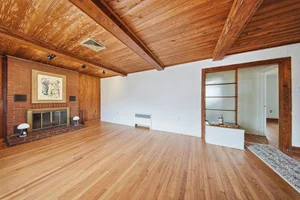
Empty rooms are hard to judge for scale in photos. Stagers bring in full sets of furniture and decor to define every main space, billed as installation plus monthly rental over a minimum term. Homes recently took a median of about 42 days to sell, so compare the stager's minimum rental term with that.
The catch: if the home takes longer than the minimum term to sell, monthly rental keeps running. A vacant house may also need a vacancy endorsement on your insurance. Ask your insurer whether the policy covers a vacant home holding rented furniture.
Virtual staging for listing photos
Furniture is added digitally to listing photos of empty rooms. It's the lowest-cost way to show scale in a vacant home, and it works for rooms a buyer would otherwise scroll past.
The downside: buyers walk into the real, empty rooms at the showing, and the gap between photo and reality can disappoint.
Which rooms to stage first
You don't need to stage every room. According to NAR's 2025 Profile of Home Staging, buyers consider the living room the most important room to stage (37%), followed by the primary bedroom (34%) and the kitchen (23%). The guest bedroom (7%) was deemed least important. Among sellers' agents, the most commonly staged rooms were the living room (91%), primary bedroom (83%), dining room (69%), and kitchen (68%).
The living room
This is usually the lead listing photo and the room buyers use to judge scale. Pull furniture off the walls, cut it down to the pieces that show how the room is used, and keep walkways clear. Over-furnishing makes a modest room look smaller in a wide-angle photo, and buyers notice when it reads larger in photos than in person.
The kitchen
Clear the counters almost entirely and store small appliances. Fix the cheap items buyers notice: burnt-out bulbs, worn cabinet hardware, a dripping faucet. Staging can't hide dated cabinets or counters. Buyers will still price in a renovation, so don't spend staging money trying to disguise a kitchen that needs work.
The primary bedroom
Use neutral bedding, clear the nightstands, and pack away personal photos and collections so buyers can picture their own things in the space. Depersonalizing an occupied home usually means paying for storage or a storage pod for the listing period, so ask for that cost before you start.
Curb appeal and the front entry
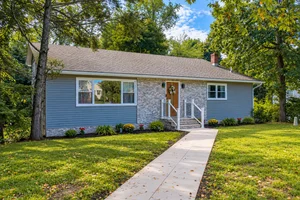
The exterior photo sets the first impression. Plan around the season you list in: mulch and planters in spring and summer, clear walks and lit entries in winter.
Winter listings can't show landscaping. Ask whether your agent has warmer-season exterior photos of the house that can be used and labeled.
Staging Warwick's older homes and farm properties
Historic village homes
Older village homes often have smaller, separate rooms and original details. Stage to show how each room is used, and let original trim, floors, and windows show rather than covering them.
Check before you start any exterior work. The Village of Warwick's Architectural and Historic District Review Board (AHDRB) has authority to review all exterior architectural changes within the designated Architectural and Historic District. No such work may proceed until the Board issues a Certificate of No Exterior Effect. Confirm with the Village of Warwick building department before making any exterior changes.
Farmhouses and horse properties
On farm and horse properties, much of what buyers are paying for is outside. Stage the barn aisle, fence lines, paddocks, and porch views as deliberately as the living room, and get photos when the land looks its best.
Outbuildings and land take far more prep time and labor than interior staging, and a stager's quote usually covers only the house. Ask what's included before assuming the barn is part of the job.
Homes competing with new builds
Buyers who are also touring new builds have just walked through professionally furnished model homes. A resale home shown empty or cluttered is compared directly against that standard.
Staging narrows the presentation gap, not the age gap. Buyers will still compare systems, finishes, and warranties, so price realistically against nearby new construction.
How to choose a home stager near Warwick
Get two or three written quotes that separate consultation, installation, monthly rental, minimum term, and removal.
Finding the right professional
Look for:
recent before-and-after photos of homes at a similar price and style
proof of liability insurance
a professional association membership
The Real Estate Staging Association (RESA) has an Orange County, NY, chapter, a networking group for home stagers, affiliates, and Realtors in the area. Its chapter page doesn't list member names, so search RESA's national member directory instead.
A strong portfolio of new-build or city condo work may not translate to a farmhouse or a village Victorian. Ask to see homes like yours.
Questions to ask before signing
Get answers in writing on:
how far ahead the stager needs to book an install before your listing date
the minimum rental term
what happens if the home sells early or takes longer than expected
who carries insurance on the rented furniture
Month-to-month extensions after the minimum term are where costs tend to grow, so get the extension rate in writing before you sign. The Caplicki Home Team can walk the house before listing and suggest what to stage.
Getting your Warwick home ready to list
Staging is one step in listing preparation, alongside pricing the home and planning for closing costs. The Caplicki Home Team can help decide what to stage and connect sellers with local stagers. The process to sell your house involves multiple steps; our breakdown explains what to expect.
This page provides general information, not legal, tax, or financial advice.
At a glance
Median sale price, all homes: $479,772, down 4.2% year over year (90 days ending 2026-09-30, based on 25 sales)
Median sale price, single-family: $517,294, down 5.1% year over year (90 days ending 2026-09-30, based on 19 sales)
Median days on market: 42 for all homes, 40 for single-family (90 days ending 2026-09-30)
Median sale-to-list ratio: 101.5% for all homes, 101.6% for single-family (90 days ending 2026-09-30)
Share sold above list: 48% of all homes, 42.1% of single-family (90 days ending 2026-09-30)
Months of supply: 2.7 for all homes, 2.5 for single-family (90 days ending 2026-09-30)
Homes for sale: 22 total, 16 single-family (90 days ending 2026-09-30)
Median price per square foot: $317 for all homes and for single-family (90 days ending 2026-09-30)
Caution: every figure here rests on fewer than 30 sales (25 all homes, 19 single-family), so treat them as direction, not precision
Home staging in Warwick, NY, FAQs
Does home staging work when selling a house in Warwick, NY?
It depends on the home. NAR's 2025 Profile of Home Staging (the latest edition, based on a survey of about 1,200 real estate professionals) found that 83% of buyers' agents said staging made it easier for a buyer to visualize the property as a future home. It also found that 29% of real estate agents reported staging led to a 1% to 10% increase in the dollar value offered compared with similar unstaged homes.
How much does home staging cost in Warwick, NY?
Per NAR's 2025 Profile of Home Staging, the median cost when sellers used a professional staging service was $1,500 nationally, compared with $500 when the listing agent handled the staging personally. Local quotes vary by home size and whether the property is occupied or vacant.
Who pays for home staging, the seller or the listing agent?
It depends on the listing agreement. Some agents include a consultation or virtual staging, but physical staging is usually the seller's cost. Check the agreement for who pays for staging, virtual staging, and professional photos before signing.
Can I deduct home staging costs when I sell my house?
IRS Publication 523 (Selling Your Home) defines selling expenses to include items such as sales commissions, advertising fees, legal fees, and loan charges paid by the seller. Ask a tax professional whether your staging costs qualify.
Do virtually staged listing photos have to be labeled?
Ask your agent to confirm the current OneKey MLS rules on labeling or disclosing virtually staged images, and whether an unstaged version must also be shown. Virtual staging may add furniture but should not change permanent features.
How far ahead should I book a home stager before listing?
Ask each stager for their current lead time from consultation to install, and schedule the install before the listing photo date.
Can staging cover up problems I would otherwise have to disclose?
No. Staging can't be used to conceal known defects. Ask a real estate attorney about your New York disclosure duties and your own disclosure form.