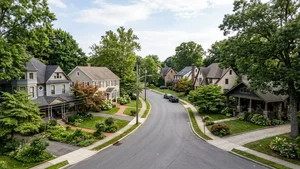
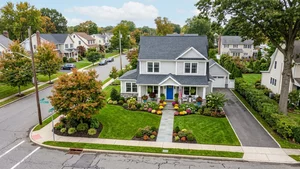
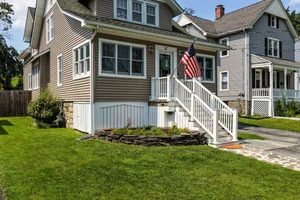
Warwick is a town in the southwestern part of Orange County, New York, and if you're looking at property here or weighing the pros and cons of living in Warwick, NY, the history isn't just backdrop - it's baked into the land, the buildings, and the way the market behaves. This was an 18th-century farming settlement first, and it's never entirely stopped being one. That continuity is a big part of what draws buyers.
As of late 2026, the median home sale price in Warwick sits around $493,000. Homes are averaging roughly 17 days on the market, which tells you demand is real and steady. The buyers coming here want the historic character. They want the rolling farmland. And the inventory reflects that - there's not a lot of it.
A Quick Look at Warwick's Background
The Town of Warwick was officially incorporated in 1789, but the story starts earlier than that. By the middle of the 18th century, it was already functioning as an agricultural stopover along the King's Highway - a working place, not a planned one.
What grew out of that are the apple orchards and vineyards you'll still find here today, and the famous Black Dirt Region, where generations of onion farmers have worked the rich peat soil. That heritage isn't ceremonial. The annual Applefest, launched in 1989, pulls up to 35,000 visitors for fresh cider and homemade pies. It's the kind of event that tells you a lot about a town's identity.
Town Versus Village Structure
A question I hear from buyers regularly: what's the difference between the town and the village? Warwick is a town, but it also contains the smaller Village of Warwick, incorporated in 1867. Two different entities, one name.
It matters practically. Properties within the village limits often have different utility connections and zoning rules than those out in the broader town's rural outskirts. Worth knowing before you fall in love with a listing.
Location and County Details
Warwick sits in the southwestern corner of Orange County, New York. It's part of the Kiryas Joel-Poughkeepsie-Newburgh, NY Metropolitan Statistical Area, which itself falls within the larger New York-Newark-Bridgeport, NY-NJ-CT-PA Combined Statistical Area.
That position near the New Jersey border makes it a realistic option for commuters who want a genuinely rural environment without completely disconnecting from regional highways.
The Regional Real Estate Market
Warwick has its own character, but its market moves with the broader Hudson Valley economy. Right now, inventory hovers around 27 available homes. That's tight. When well-priced properties come on, multiple offers follow - and the average sale-to-list ratio sitting just over 100% confirms it. Homes here are regularly selling above asking price. That's not a fluke; it's the market telling you something.
The Meaning and Origin of the Name
The name has a specific origin, not just a vague colonial attribution. In 1719, a man named Benjamin Aske bought a small portion of a local land patent, established a farm on it, and named that farm Warwick. The settlement that grew around it adopted the name, and it eventually became the official title for both the town and the village.
Founding and Early Timeline
European settlement began in the middle of the 18th century, with early residents doing what the land invited them to do: farm it. The fertile Hudson Valley soil made that a straightforward proposition, and agricultural roots ran deep from the start.
Formal incorporation in 1789 gave the town its governance structure. Over the following century, new transportation routes pushed commercial growth forward and eventually led to the Village of Warwick's own incorporation in 1867.
Growth Through the Decades
Rail access arrived in the late 19th century, and that changed things considerably. Local farmers could suddenly ship produce to larger markets, and the town prospered. You can still see that prosperity in the commercial buildings along Main Street.
The 1894 Railway Station on Railroad Avenue is the clearest physical reminder of that era. It's the point where Warwick stopped being an isolated farming community and became a connected regional hub. That building is still standing. A lot of what was built during that period is.
Historic Sites and Districts
The Warwick Village Historic District covers 130 acres of residential and commercial properties centered around NY 94 and 17A. It was added to the National Register of Historic Places in 1984, and it spans architectural styles - Federal, late Victorian, and various revival styles - across a period running from the 1750s to 1930. The North Warwick Historic and Archeological District joined the National Register in 1995.
If you're buying within either district, these designations aren't just bragging rights. They influence local zoning regulations and shape what you can and can't do to the exterior of a property. That's a real consideration for renovation plans.
Preserved Architecture
Several individual buildings are worth knowing by name. The 1764 Shingle House is the oldest house in the village. Baird's Tavern - a stone building with a gambrel roof built in 1766 - is where George Washington stayed in 1783. The General John Hathorn Stone House dates to 1773. The Old School Baptist Meeting House was built in 1810 and is widely recognized as the most photographed building in the town of Warwick. The 1890 Romanesque Revival W.T. Anderson building on Main Street rounds out the more prominent examples.
These aren't museum pieces. They're in a live real estate market, and some of them do change hands.
What Warwick Is Known For Today
Ask anyone who lives here what defines the town and you'll hear the same things: the apple orchards, the Black Dirt Region's onion farms, the historic downtown, the vineyards. Applefest remains the largest annual event, drawing crowds back every year for fresh cider and homemade treats.
That focus on local food and farming isn't just tourism - it shapes the local economy and keeps the town's identity grounded in something real rather than manufactured.
Famous Faces from the Area
William Henry Seward was born in 1801 in the hamlet of Florida, located within the Town of Warwick. He went on to serve as Governor of New York and as Secretary of State under Abraham Lincoln - not a minor footnote. Musician Jimmy Sturr is also noted as being from Warwick, NY. These are the kinds of connections that give a place a longer cultural memory than most.
Frequently Asked Questions
How do I find out if a house I want to buy in Warwick, NY is on the historic registry?
Check the National Register of Historic Places database, or contact the local municipal office directly. Properties within the 130-acre Warwick Village Historic District or the North Warwick Historic and Archeological District are already designated.
What are the zoning restrictions for renovating a property in the Warwick Village Historic District?
It depends on the scope of your project. The Warwick Village Historic District covers properties along NY 94 and 17A, and exterior renovations typically require municipal approval to ensure they match the historical architectural styles.
Are there any local tax breaks or grants for restoring a historic home in Warwick?
It depends on what state and federal programs are available at the time of your renovation. Talk to a local tax professional to find out whether your property in the Warwick Village Historic District qualifies for historic preservation tax credits.
What happens to my property value and selling process if my Warwick home is designated as a historic landmark?
It depends on the buyer pool and market conditions. Homes with historic designations often attract buyers looking for preserved Federal or late Victorian architecture, and they frequently sell near the town's median price of $493,000.
How do home prices in Warwick's historic village center compare to newer construction in the surrounding town?
It depends on the specific property's condition and acreage. The current median sale price across Warwick is roughly $493,000, but village homes offer walkable access to downtown amenities, while town properties often feature more land.
What architectural styles and eras are most common when shopping for older homes in Warwick, NY?
You'll mostly find Federal, late Victorian, and various revival architectural styles. These designs reflect the town's growth periods from the 1750s through 1930 and are prominently featured in the Warwick Village Historic District.